Houston is one of the most challenging — and rewarding — cities in the country for food gardening. Between the intense summer heat, high humidity, heavy clay soil, and unpredictable winters, not every plant is up for the job. But the edible plants Houston gardeners have come to rely on? They don’t just survive here. They produce.
At EcoTerra Edible Landscapes, we’ve designed and built dozens of edible gardens, raised beds, and food forests across the Houston area. Through that work, we’ve learned which plants consistently perform in our climate and which ones frustrate gardeners year after year. This list is the result of that experience.
Whether you’re starting your first raised bed or expanding an established edible garden, these 10 plants are your best bets.
What Makes a Plant ‘Houston-Tough’?
Before diving into the list, it helps to understand what we’re working with. Houston sits in USDA Hardiness Zones 9a and 9b, which means:
- Summers regularly exceed 95°F and stay humid
- Clay soil is common — heavy, slow-draining, and prone to compacting
- Winter frosts are short and infrequent, but they do happen
- Two prime growing seasons: spring (February–May) and fall (August–November)
The edible plants Houston gardeners succeed with tend to be heat-tolerant, productive across one or both growing seasons, and adaptable to our heavy soils — especially when planted in amended raised beds or garden beds with good drainage.
The Top 10 Edible Plants for Houston Gardens
1. Sweet Potatoes
Sweet potatoes are practically made for Houston. They thrive in heat, tolerate humidity, and produce abundantly in our long warm season. Plant slips in May and harvest in October — you’ll get a full root cellar’s worth from just a few plants.
- Best for: In-ground beds, large raised beds, food forests (as a ground cover)
- Houston tip: Plant in loose, well-amended soil for the best root development. Clay soil can deform the roots.
- Bonus: The leaves are edible too — great in stir-fries and salads.
2. Peppers (Hot and Sweet)
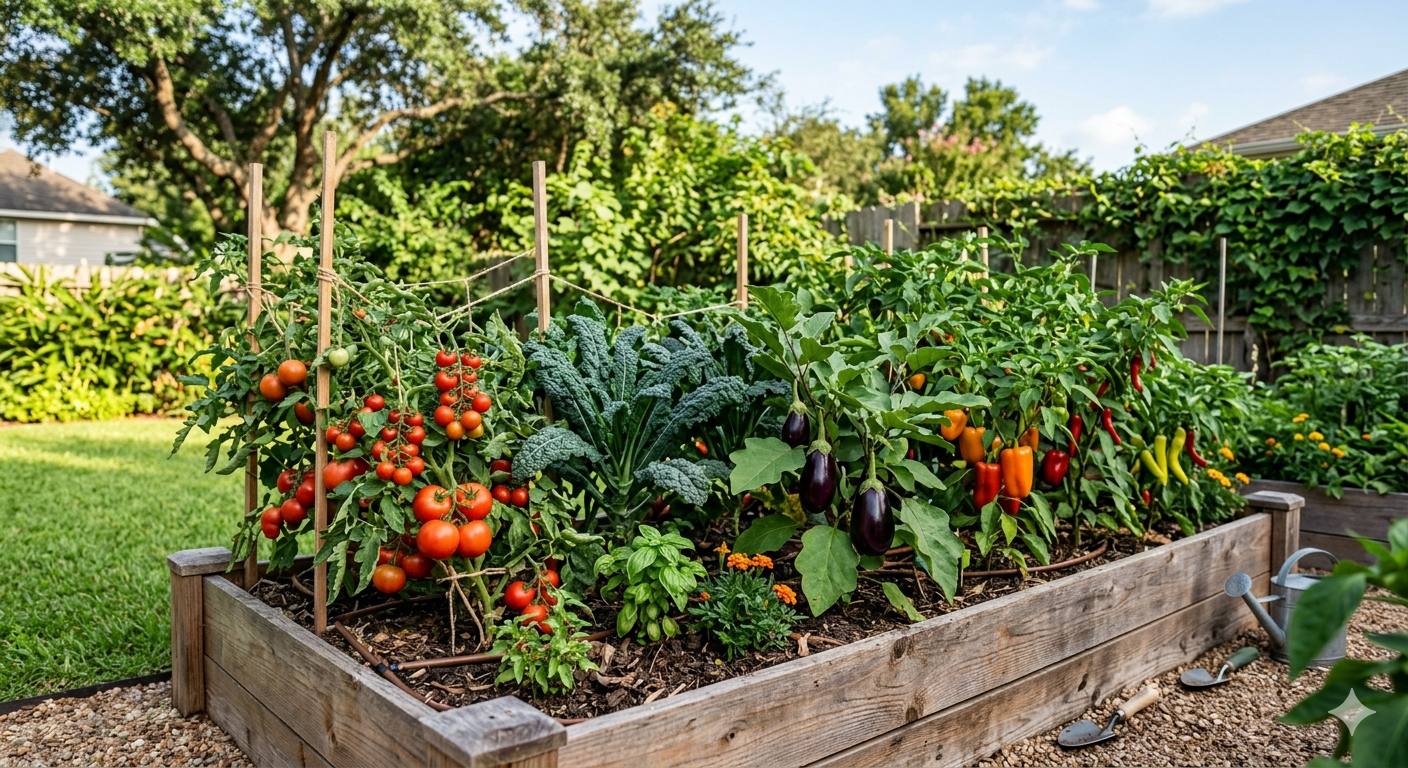
Peppers love heat, and Houston delivers. Unlike tomatoes, which struggle when temperatures stay above 95°F, peppers keep producing all summer long. Jalapeños, cayennes, banana peppers, and bell peppers are all reliable performers here.
- Best for: Raised beds, containers, edible garden borders
- Houston tip: Start seeds indoors in January–February, transplant in March. Plants may overwinter in mild years.
- Bonus: A single pepper plant can produce hundreds of peppers in a season.
3. Okra
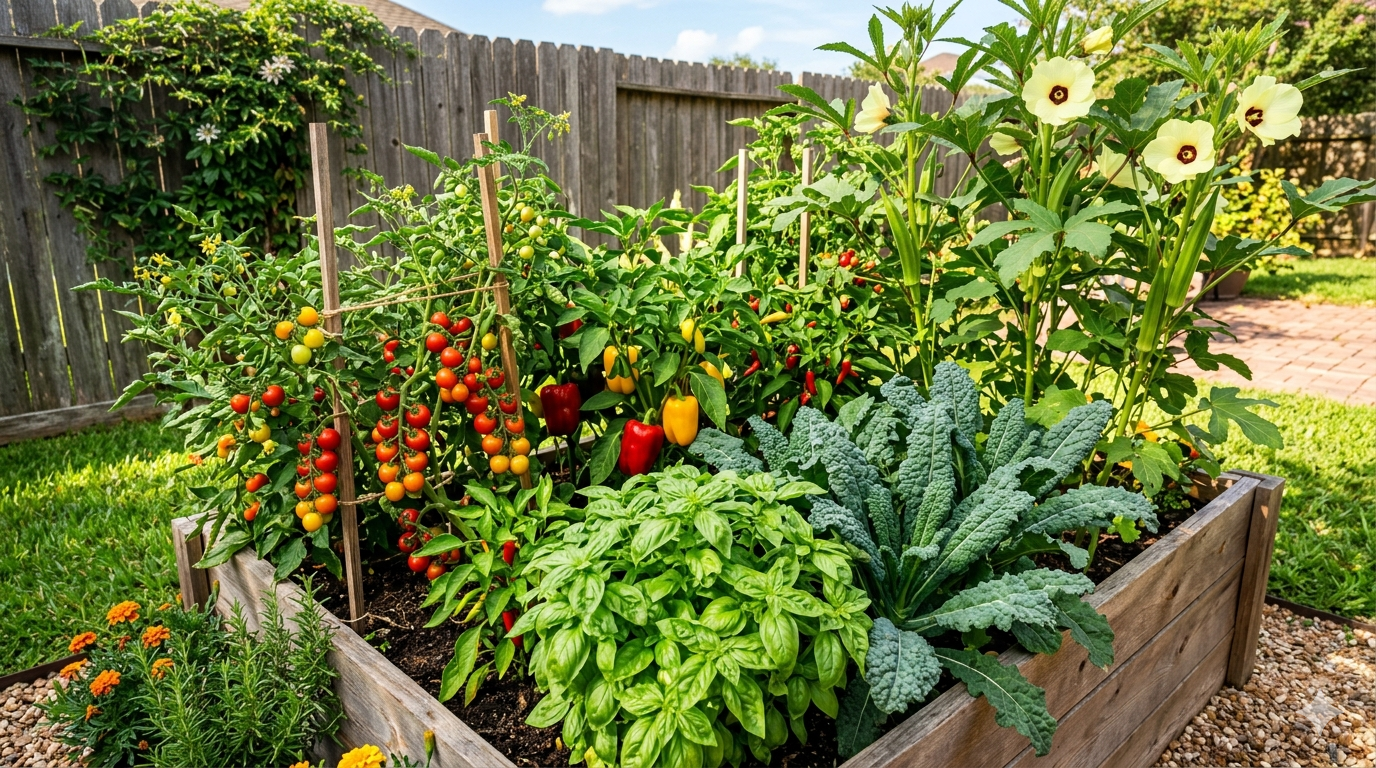
Okra is one of the most heat-tolerant vegetables on the planet, and it’s a Houston staple for good reason. It grows fast, looks beautiful (it blooms like a hibiscus), and produces prolifically all summer without much fuss.
- Best for: In-ground gardens, food forest edges, large raised beds
- Houston tip: Direct sow in April–May when soil is warm. Harvest pods when they’re 3–4 inches long to keep the plant producing.
- Bonus: Okra doubles as an ornamental — some varieties grow 6+ feet tall with gorgeous yellow blooms.
4. Basil
Basil is one of the most productive herbs you can grow in Houston. It loves heat, grows quickly, and keeps producing as long as you harvest regularly and prevent flowering. Genovese, Thai, and holy basil all perform well here.
- Best for: Raised beds, containers, herb gardens, edible garden borders
- Houston tip: Plant after the last frost (usually February). Pinch flowers immediately to extend the harvest.
- Bonus: Plant near tomatoes — basil repels aphids and other common pests.
5. Tomatoes
Tomatoes are the crown jewel of Houston’s spring garden. They don’t love our summer heat, but planted in February and harvested through May and June, they produce beautifully. Cherry tomato varieties like Sweet 100, Sun Gold, and Black Cherry are the most reliable edible plants Houston gardeners grow.
- Best for: Raised beds (essential for drainage), caged in edible garden designs
- Houston tip: Start transplants in January indoors, plant out in February–March. Pull plants in June when heat collapses production, and replant in August for a fall crop.
- Bonus: Cherry tomatoes are far more heat-tolerant than large slicers — always include at least one variety.
6. Southern Peas (Black-Eyed Peas, Purple Hull, Crowder)
Southern peas were born for the South. They fix nitrogen in the soil, tolerate drought and heat, and produce steadily through summer when most other vegetables have given up. They’re one of the most underrated edible plants Houston gardens can grow.
- Best for: In-ground beds, food forest understory, large raised beds
- Houston tip: Direct sow in April–July. Let some pods dry on the vine for seed saving.
- Bonus: As a legume, southern peas improve your soil while you eat. Win-win.
7. Figs
The Brown Turkey fig is one of the most dependable edible plants Houston’s climate supports. Figs thrive in heat, tolerate clay soil, and produce two crops per year — one in June and a larger main crop in August–September. Mature trees require almost no maintenance.
- Best for: Food forests, edible garden anchors, yard specimens
- Houston tip: Plant in full sun with room to spread — they can reach 15–20 feet. Mulch heavily around the base.
- Bonus: Figs make an excellent canopy layer in a food forest design.
8. Kale and Collard Greens
Kale and collards are the workhorses of the Houston cool season. They thrive from October through April, survive light frosts, and actually taste better after a cold snap. Lacinato (dinosaur) kale, curly kale, and Georgia collards are all proven performers.
- Best for: Raised beds, fall and winter edible gardens
- Houston tip: Start seeds or transplants in September–October. In mild winters, plants may survive until May.
- Bonus: Collards are a perennial in many Houston gardens — cut them back in summer and they often resprout in fall.
9. Lemongrass
Lemongrass is one of the most versatile edible plants Houston yards can support. It grows into a large, attractive ornamental clump, thrives in heat and humidity, and tolerates our clay soil better than most herbs. Harvest stalks year-round for cooking, teas, and marinades.
- Best for: Food forest ground layer, edible garden borders, large containers
- Houston tip: Plant in spring. Clumps die back in winter but resprout reliably. Divide every few years.
- Bonus: Lemongrass repels mosquitoes — a serious bonus in Houston.
10. Citrus (Satsuma Mandarin, Meyer Lemon, Kumquat)
Citrus is the ultimate reward crop for Houston gardeners. Satsuma mandarins and Meyer lemons are particularly well-suited to our climate — they handle mild freezes better than most citrus, produce sweet fruit with minimal effort, and look stunning in an edible landscape.
- Best for: Food forests, specimen trees in edible gardens, large containers
- Houston tip: Plant in the ground (not containers) for best long-term production. Protect with frost cloth on the rare nights below 28°F.
- Bonus: Kumquats are the most freeze-tolerant citrus and produce abundantly — great for smaller spaces.
Quick Reference: Houston Edible Plants by Season
| Spring | Summer | Fall/Winter | Year-Round |
| Tomatoes, Peppers, Basil | Sweet Potatoes, Okra, Southern Peas | Kale, Collards | Figs, Citrus, Lemongrass |
Tips for Growing Edible Plants in Houston’s Clay Soil
One of the biggest challenges for Houston gardeners isn’t the heat — it’s the soil. Heavy clay drains poorly, compacts easily, and can suffocate roots. Here’s how we address it:
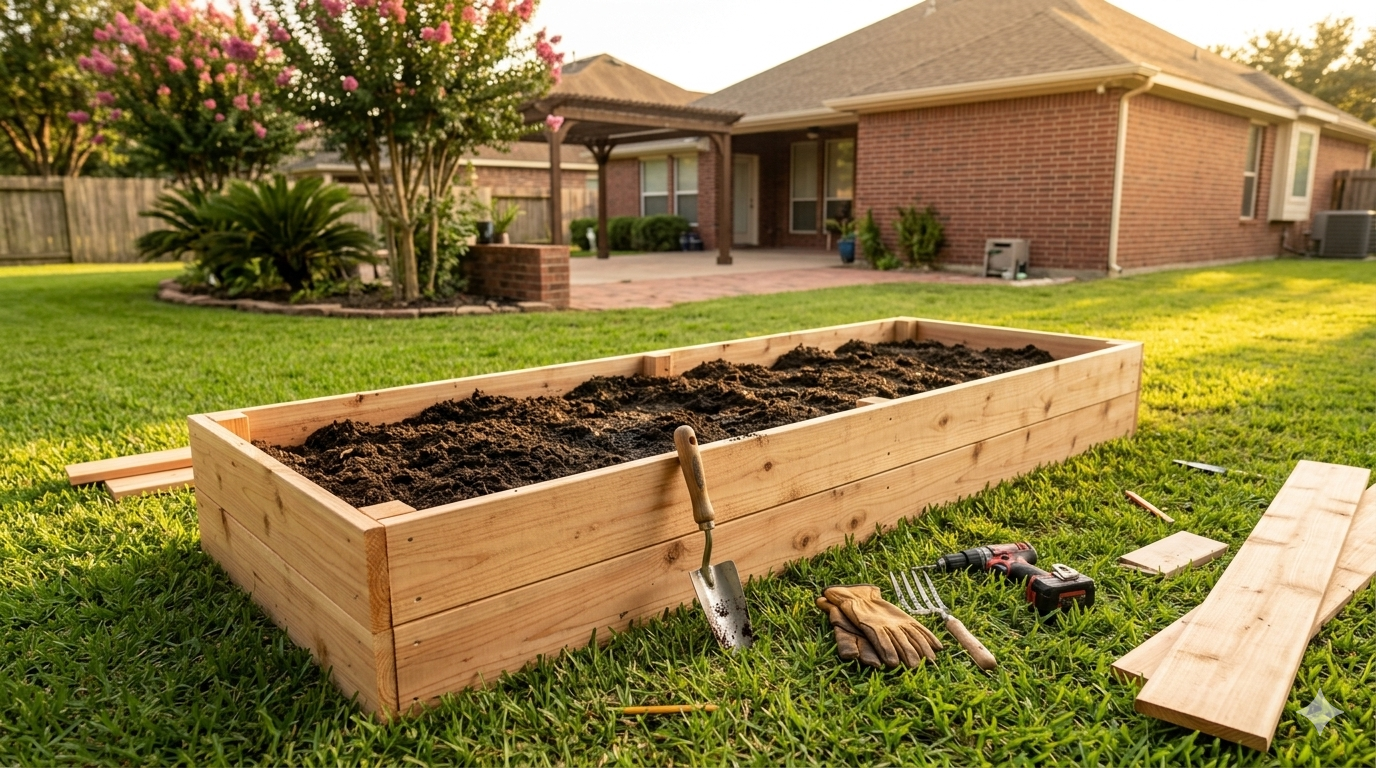
- Raised beds: The single best upgrade for Houston edible gardens. Fill with a quality blend of topsoil, compost, and expanded shale for drainage.
- Compost heavily: Working 3–4 inches of compost into clay beds every season improves structure over time.
- Mulch: A 3-inch layer of mulch regulates soil temperature, retains moisture, and slowly improves clay as it breaks down.
- Expand shale: Adding expanded shale (haydite) permanently improves drainage in clay — unlike sand, which can make drainage worse.
For more detail on improving Houston clay soil, the Texas A&M AgriLife Extension has excellent regional resources at agrilifeextension.tamu.edu.
Ready to Build Your Houston Edible Garden?
Knowing which edible plants Houston’s climate supports is the first step. Designing a garden that actually works — with the right soil, layout, and plant combinations — is where EcoTerra Edible Landscapes comes in.
We design and build custom raised beds, edible gardens, and food forests for Houston homeowners. Whether you want a simple raised bed starter kit or a full backyard food forest, we’ll create something that produces for years to come.
→ Explore our Custom Raised Beds → Learn about our Edible Garden designs → Book a Coaching & Consulting session